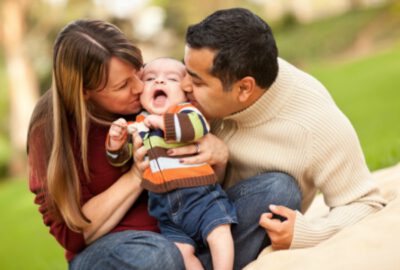
Your baby’s first year is an exciting time of astounding growth! She’ll learn how to sit, roll, stand, crawl, walk, and communicate! There is a lot you can do to not only help her learn to communicate with you better, but to communicate with her in a way that makes her feel safe, secure, and loved. This positive two-way communication is the beginning of a life-long relationship – and way of relating – between you and your child.
Infants communicate with crying, sounds, and nonverbal cues such as smiles and grimaces, movements such as kicking their legs, and gestures like pointing, nodding, and shaking their heads. Babies also communicate with squeals, laughter, and babble!
Here are some tips to encourage communication with your baby:
1. Respond quickly and warmly to cries.
If you’re worried about spoiling him, don’t. Research shows it’s okay to pick up your baby every time he cries. Babies cry differently depending on need, and you’ll soon learn how to discern between a hunger cry and a scared cry, for example.
Whether he needs feeding or just a bit of attention, responding every time he cries will help him feel safe, and that’s good for brain development.
2. Talk and sing to your baby often.
Again, researchers say this boosts your baby’s brain power! The more words he hears, the greater her vocabulary will be.
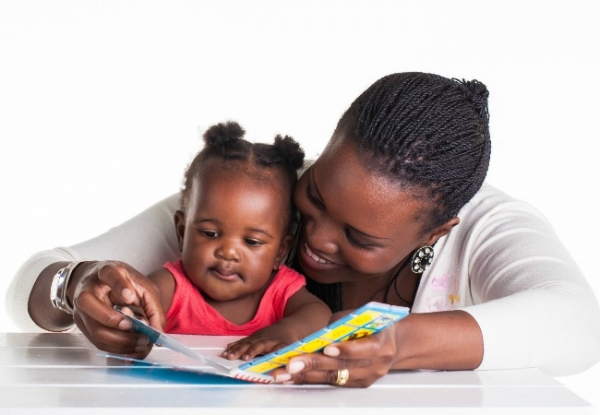
3. Read to her often.
She may not understand what you’re saying, but she will enjoy listening to your voice, and this helps her appreciate language early on. Reading aloud daily to baby builds a wonderful habit very early that you’ll want to continue throughout childhood, and possibly into adulthood!
Related Article: The Most Fun Baby Signs
4. Copy her sounds and gestures.
Hold a “conversation” with her by imitating her verbalizations and pausing for her to “answer.” This “back and forth” is modeling good communication skills.
5. Use a warm, happy voice when talking to your baby.
Some research has shown that infants understand your tone of voice before they understand your words.
6. Show interest when your baby laughs, coos, and babbles.
Be present. Look her in the eyes and respond when she makes sounds. This communicates that what she has to “say” matters.
7. Act as commentator by describing objects or activities.
Talk through routines like diaper changes and feeding, describe colors and textures of objects, and explain what is happening around baby.
8. Respond to non-verbal communication with words.
If you observe him reaching for a toy, you might say, “I see you are reaching for this bunny. Do you want to play with bunny?” Learn your child’s engagement and disengagement cues, or in other words, when she’s ready to interact and when she needs a break.
9. Mirror your baby’s facial expressions to encourage communication.
Make your own expressions for your baby to imitate as well. Try sticking your tongue out, lifting your eyebrows, opening your mouth wide, and pursing your lips.
10. Teach your baby to sign!
As early as 6 months, you can begin teaching your baby sign language. Here are 12 steps from Start ASL to get you started.
Related Article: The Baby Signs That Changed My Life